10 nm Scale Precision Patterning via EBL
Precise nanoscale patterning enables strong electric-field enhancement at individual resonators. 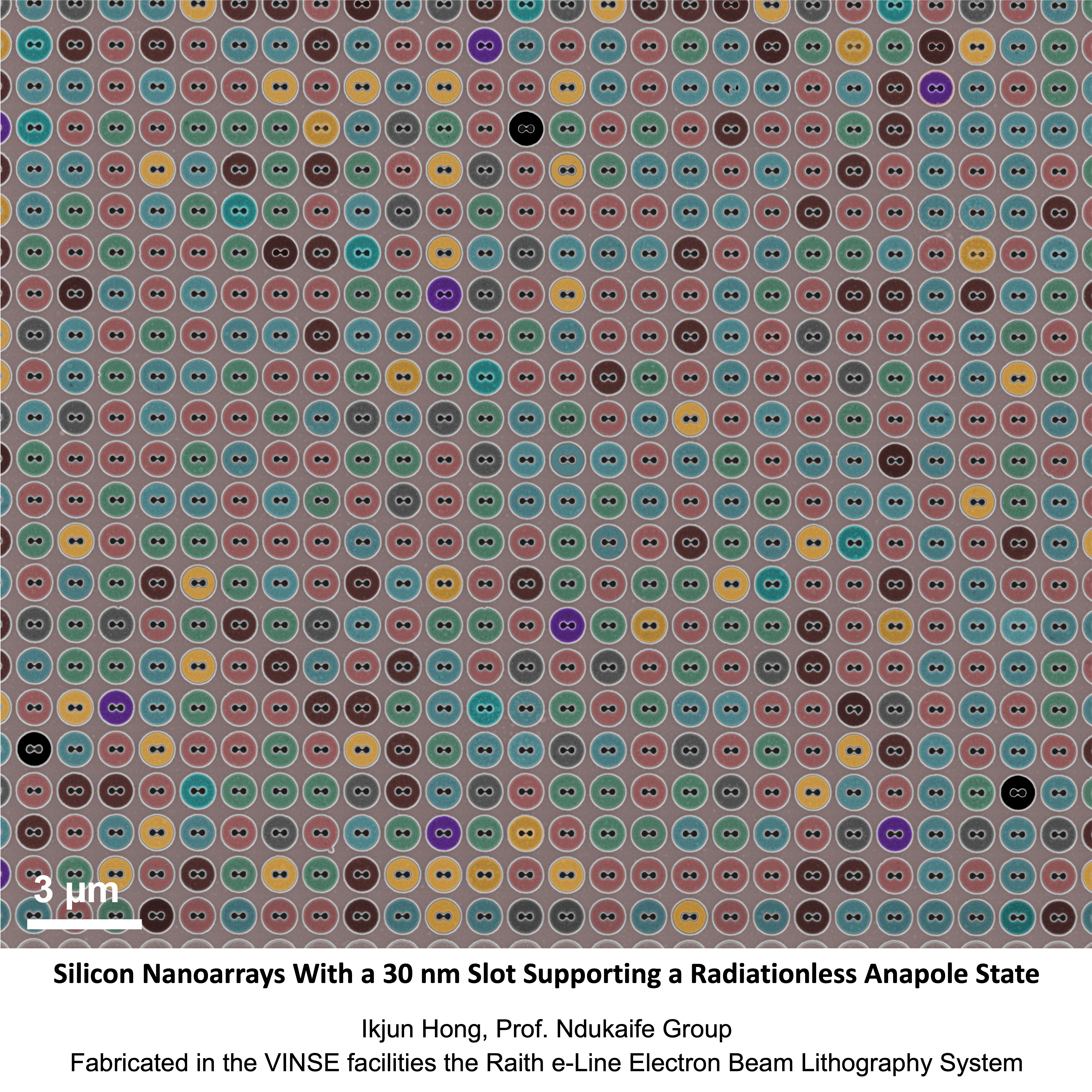
Precise nanoscale patterning enables strong electric-field enhancement at individual resonators.
Can we inversely predict mask geometries to achieve accurate patterning beyond diffraction limits based on Hopkins/Abbe imaging theory?
Image generated by ChatGPT. 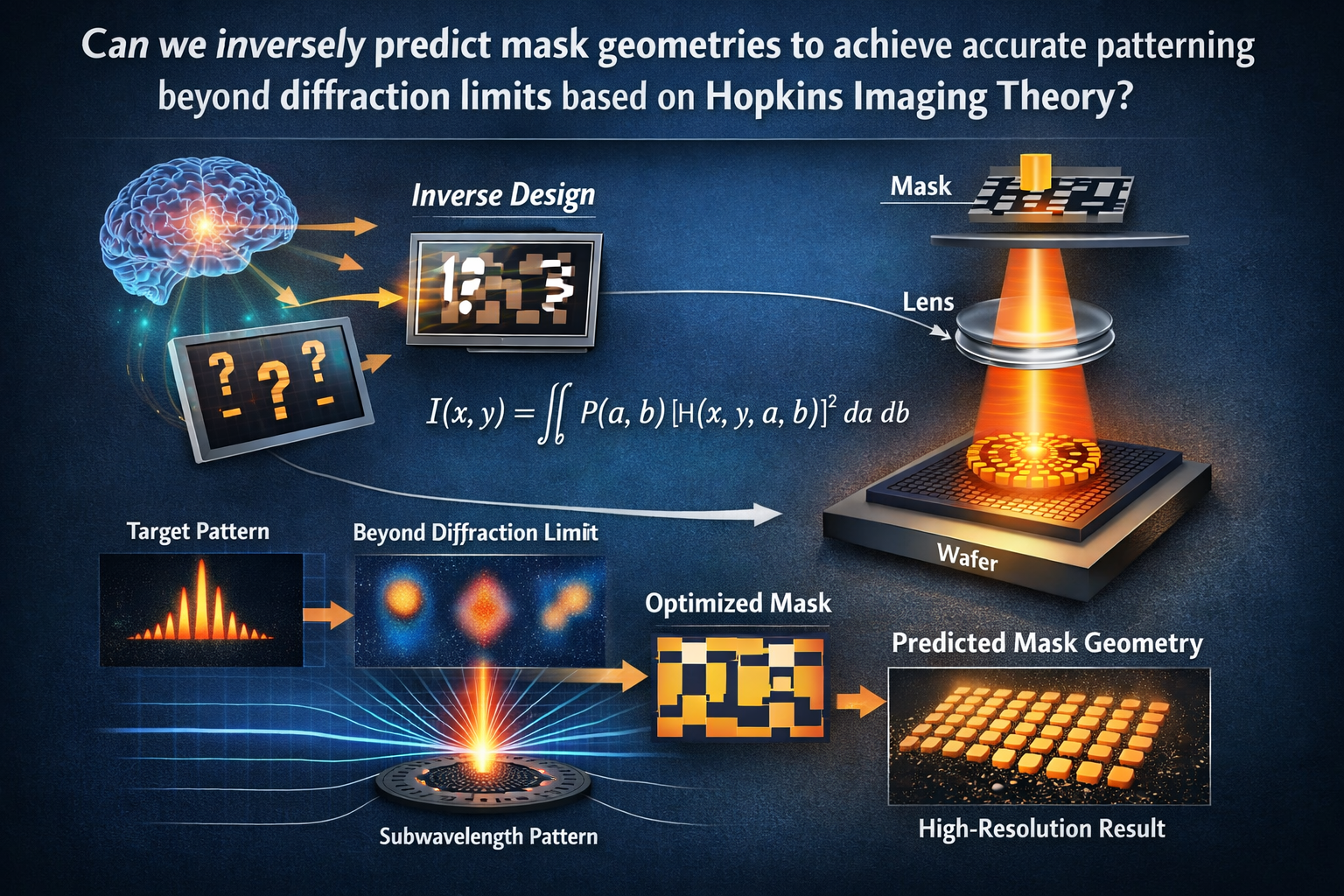
Reducing hallucinations using lightweight retrieval-augmented generation (RAG).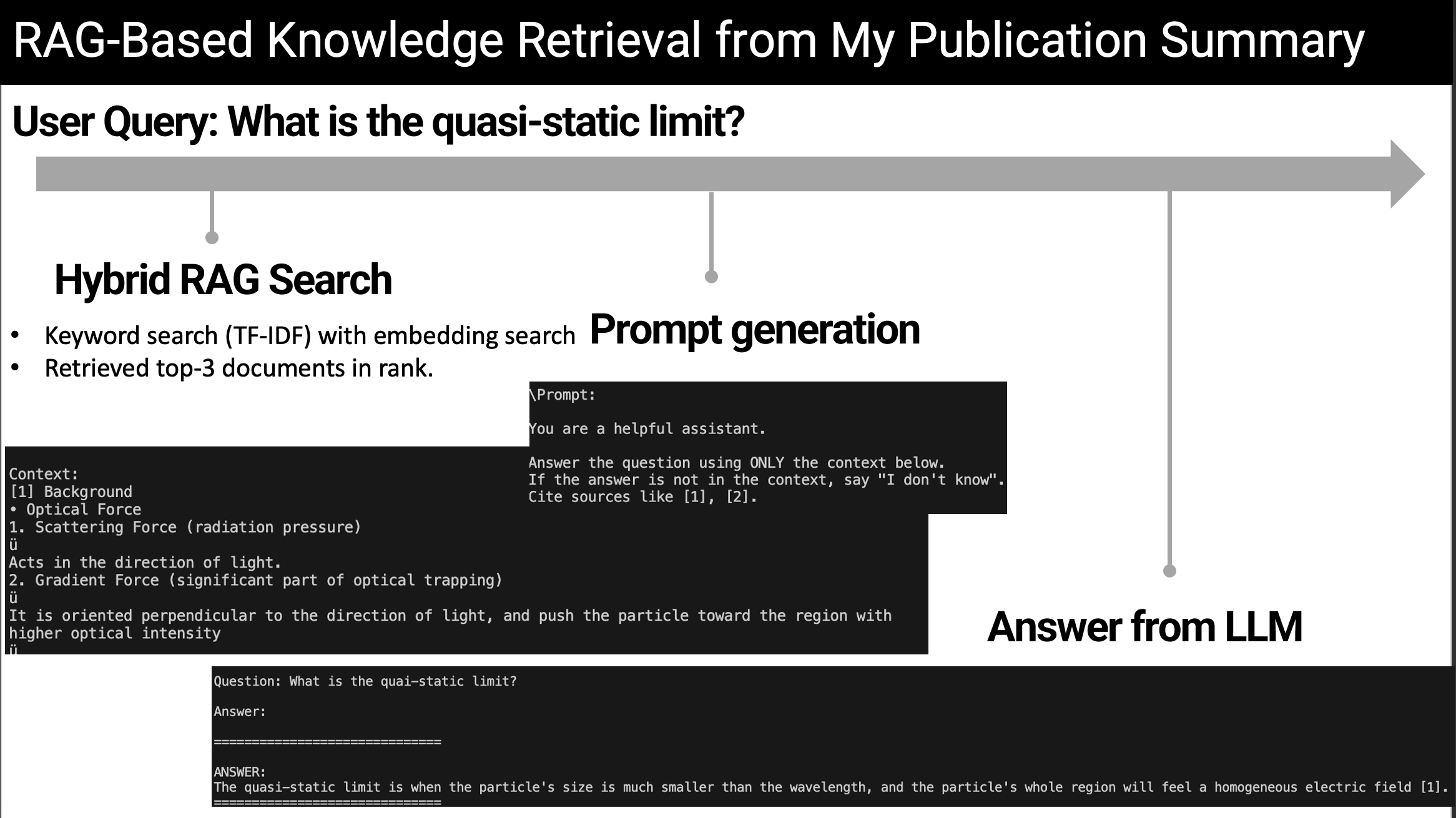
Exploring acousto-optic effects in air to generate controllable refractive index perturbations for free-space display systems.
OLED luminance degradation prediction over future time windows using a transformer-based time-series model. Delta luminance was incorporated to improve training stability and forecasting performance.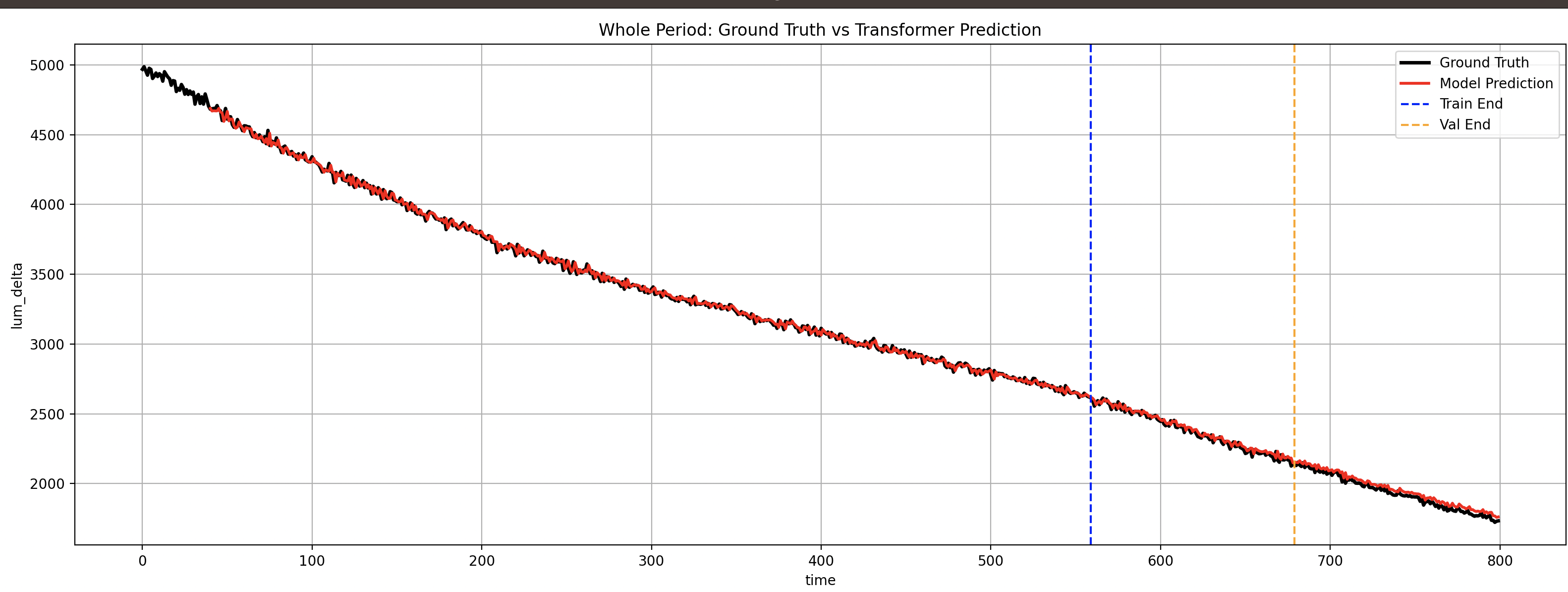
Developed an adjoint-based inverse design framework to optimize nanoscale optical masks for diffraction control, leveraging Abbe’s imaging theory and Fourier-domain constraints.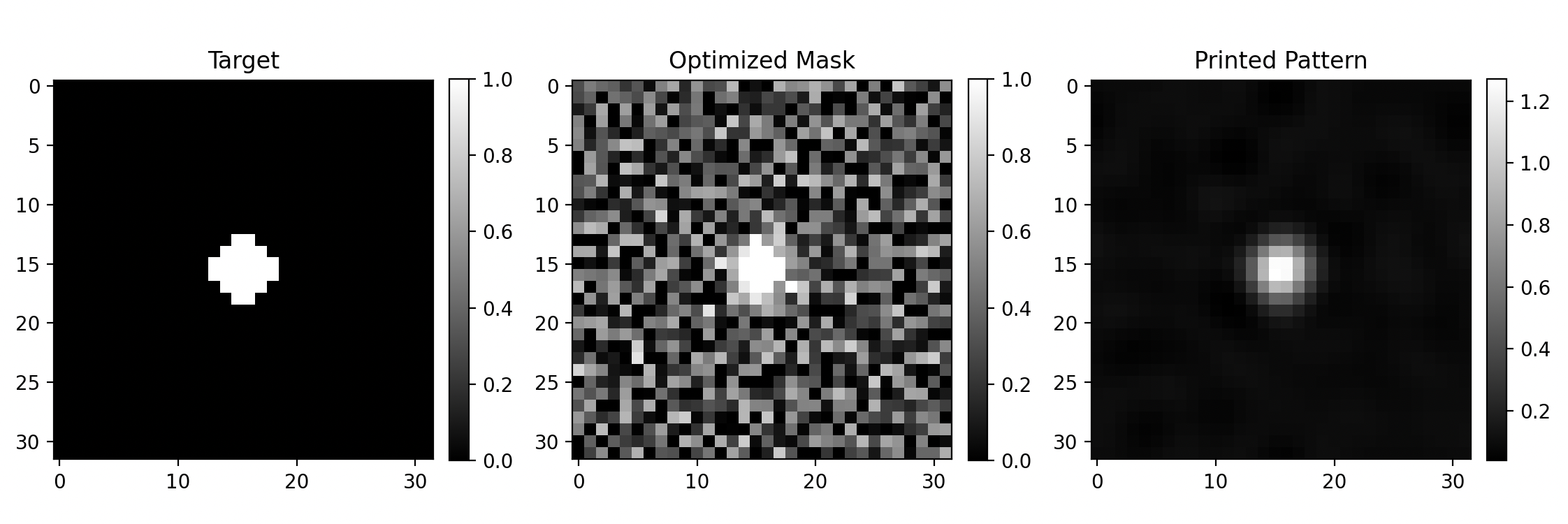
Starting from a random phase mask, perform FFT and IFFT back and forth. During this procedure, enforce the measured amplitudes from the image plane and the Fourier plane. The phase retrieval happens because the results of FFT and IFFT are in complex form, so by considering the real and imaginary parts of the result, we can update the phase.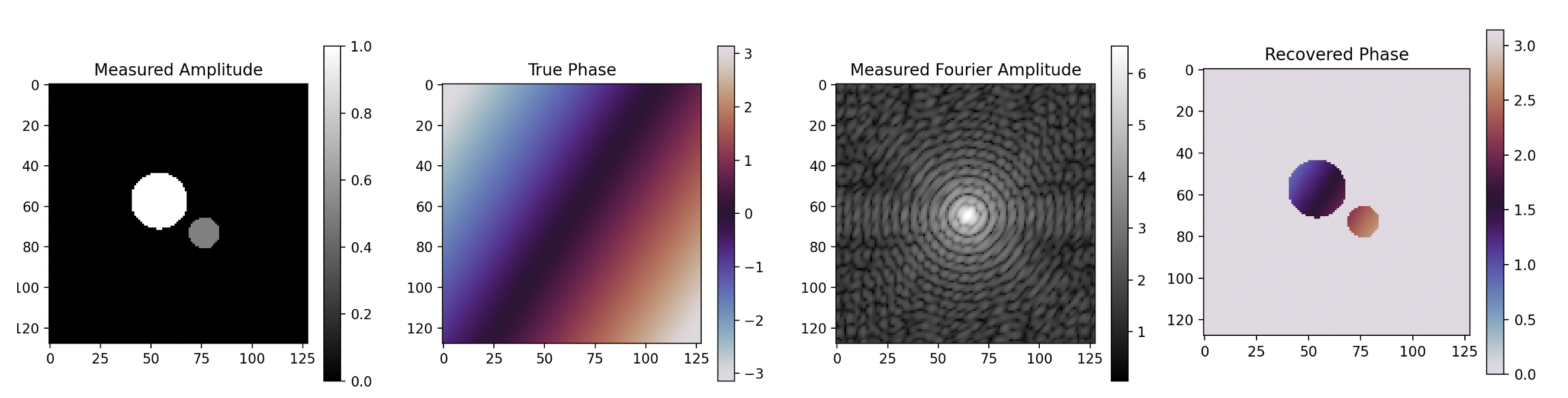
Developed a ytterbium-doped fiber laser using subharmonic cavity modulation to generate quasi-Q-switched mode-locked pulses for enhanced 532 nm second-harmonic generation in MgO:PPLN.
Challenge – Efficient nonlinear frequency conversion is limited by insufficient peak power and pulse dynamics in conventional fiber laser systems.
Approach – Designed a quasi-Q-switched mode-locked fiber laser using subharmonic cavity modulation. Enhanced pulse energy and peak power to improve nonlinear interaction efficiency in MgO:PPLN for 532 nm SHG.
Techniques – Fiber laser systems, AOM-based modulation, nonlinear optics (SHG), optical amplification, RF modulation
Instruments – Optical spectrum analyzer (OSA), oscilloscope, RF spectrum analyzer; photodetectors, CMOS cameras; gain fibers (Er, Yb), WDM, isolators, wave plates, RF drivers 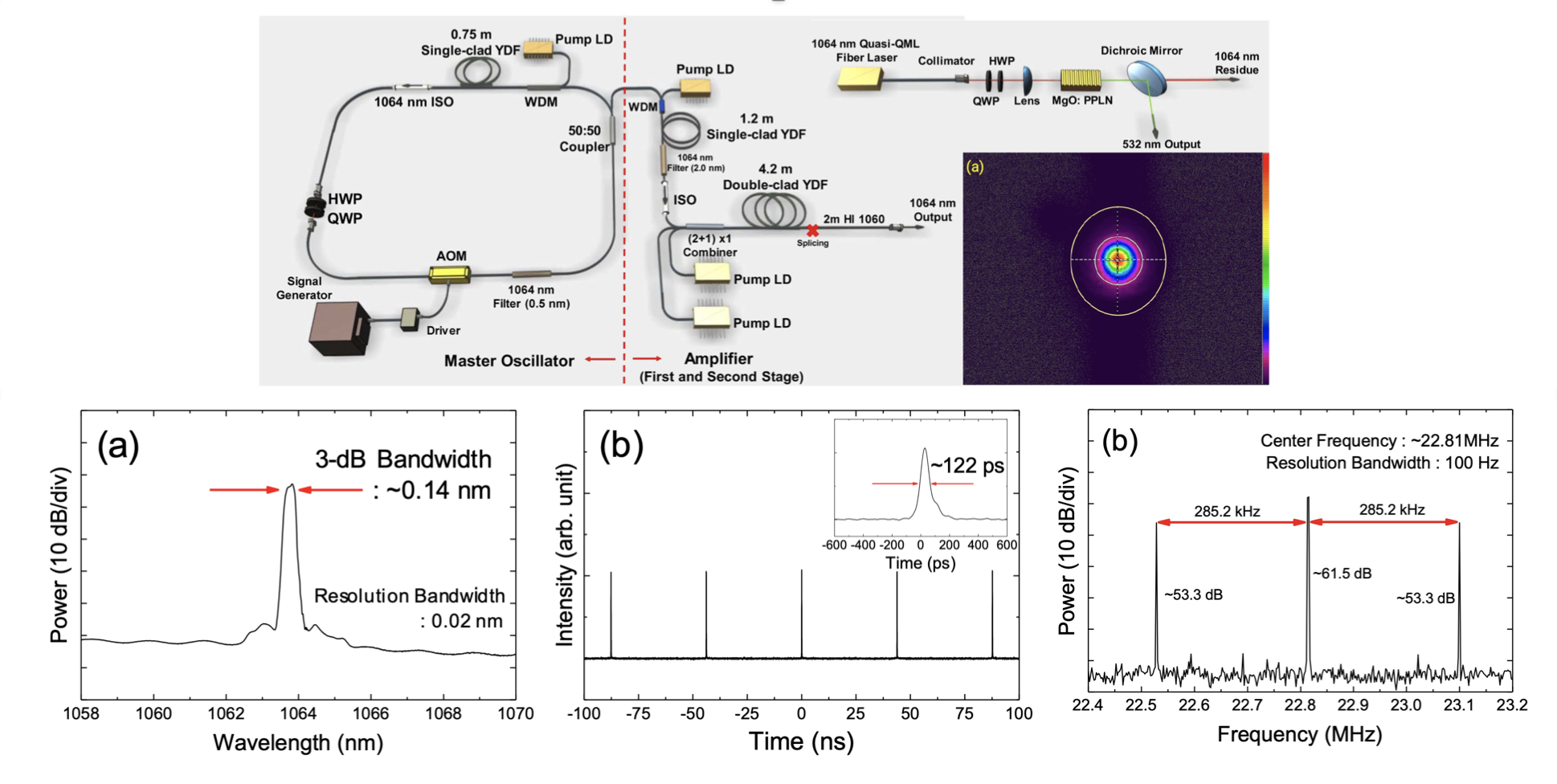
Designed an anapole-enhanced dielectric nanotweezer platform combining optical and diffusiophoretic forces for low-power, label-free nanoparticle manipulation.
Challenge- Near-field trapping experiments are strongly influenced by Brownian motion, making it difficult for nanoparticles to approach the nanoresonator. An additional transport mechanism is required to guide particles into the near-field region.
Approach- We utilize diffusiophoresis induced by localized thermal gradients from the nanoantenna. This generates fluid-driven transport, enabling particles to be delivered toward the resonator for efficient trapping.
Techniques- Thermonanophotonics, EM/thermal/fluid simulations, Nanofabrication (EBL, PECVD, RIE)
Instruments- Nikon microscopy systems, CW lasers, Photodetectors, CMOS cameras 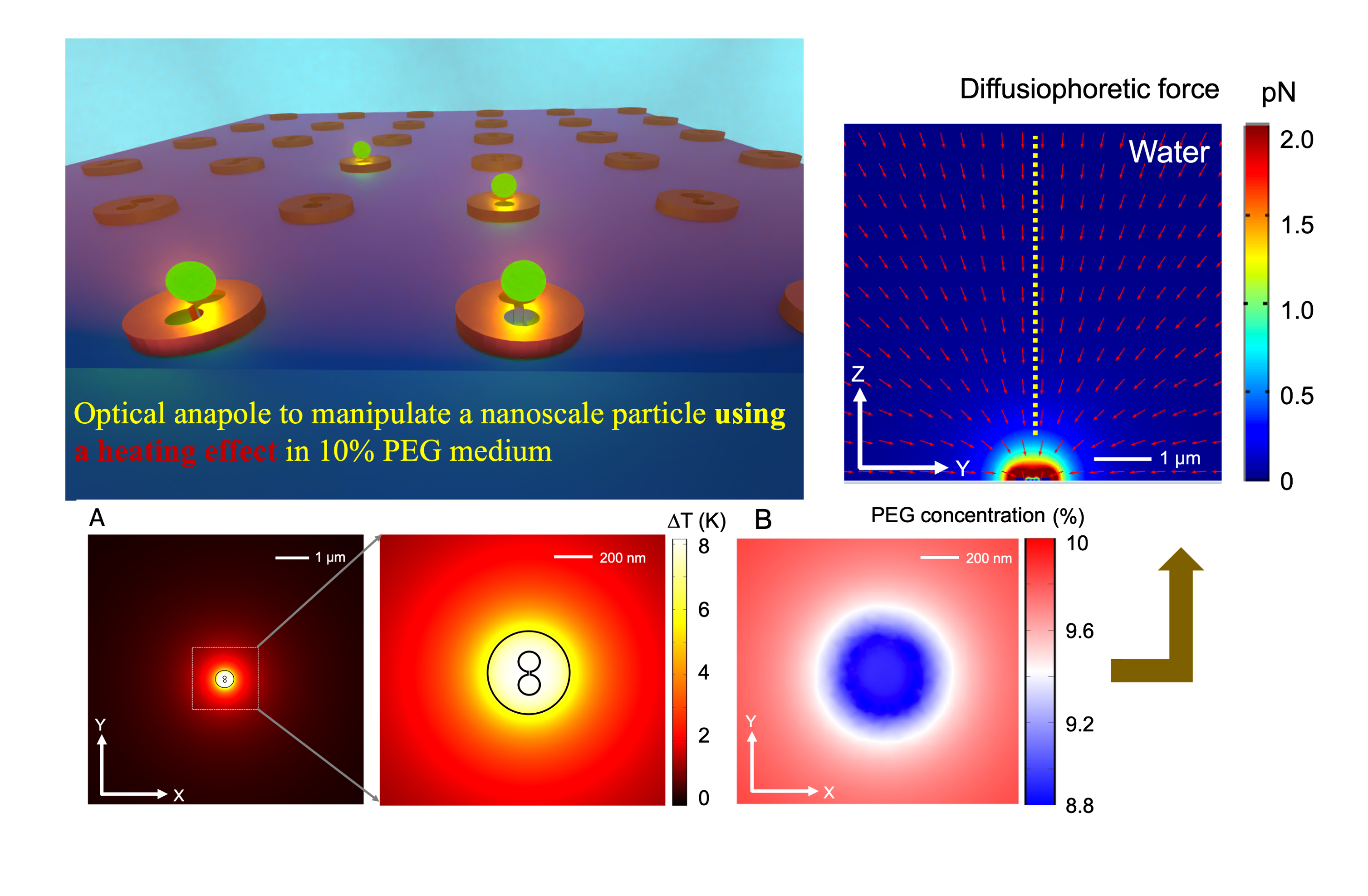
Demonstrated nanoparticle trapping using distributed Bragg reflector (DBR)-enhanced optical fields for improved confinement and manipulation at the nanoscale.
Challenge- Effective nanoscale particle trapping is fundamentally limited by the diffraction of light. Here, we enhance the near-field intensity in a single nanoantenna to increase the optical gradient force, enabling stable trapping of particles smaller than 50 nm.
Approach- We leverage near-field enhancement from the slot effect in a reflector-backed nanoantenna system supported by a distributed Bragg reflector (DBR). The slot geometry concentrates the electric field within the low-index gap, consistent with Maxwell’s boundary conditions, thereby significantly enhancing the local field intensity.
Techniques- Thermonanophotonics, coupled EM/thermal/optical force simulations, thin-film optimization (DBR), Nanofabrication (EBL, PECVD, RIE)
Instruments- Nikon microscopy systems, CW lasers, Photodetectors, CMOS cameras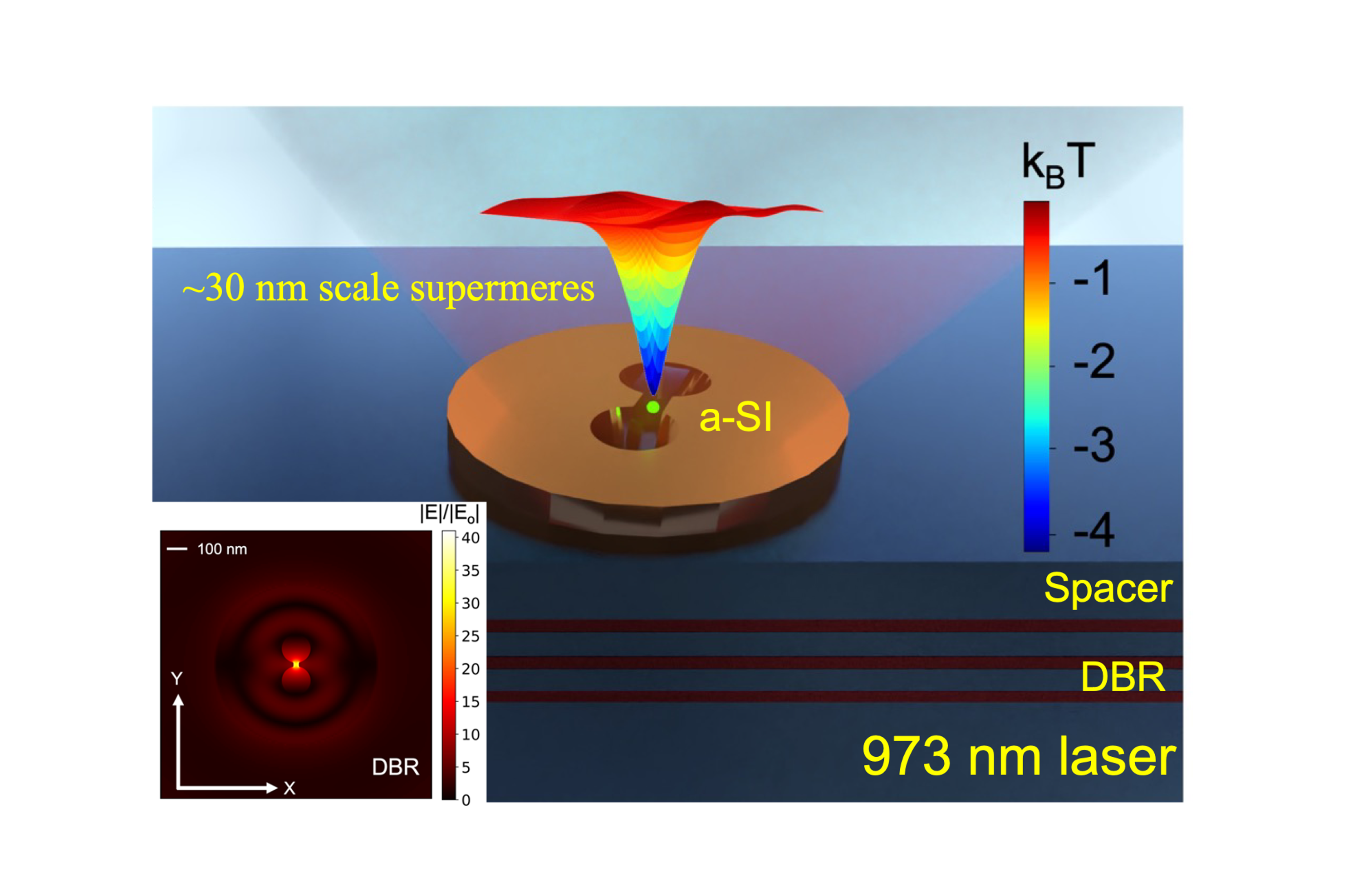
Developed a parallelized nanophotonic trapping system using photolithographically defined structures, enabling rapid and scalable manipulation of nanoscale particles beyond conventional single-beam optical tweezers. Keywords: parallel trapping, nanophotonics, photolithography, optical tweezers, scalable sensing.
Challenge- Achieving high-efficiency, comprehensive analysis of single nanoparticles to determine their size, shape, and composition is essential for understanding particle heterogeneity with applications ranging from drug delivery to environmental monitoring. Existing techniques are hindered by low throughput, lengthy trapping times, irreversible particle adsorption, or limited characterization capabilities.
Approach- We introduce Interferometric Electrohydrodynamic Tweezers (IET), an integrated platform that combines rapid molecular trapping, interferometric scattering imaging, and Raman scattering to rapidly trap and characterize single nanoparticles within seconds in one integrated platform.
Techniques- Thermal/flow simulations(DBR),Nanofabrication (Lithography, Evaporation)
Instruments- Nikon microscopy systems, CW lasers, Photodetectors, CMOS cameras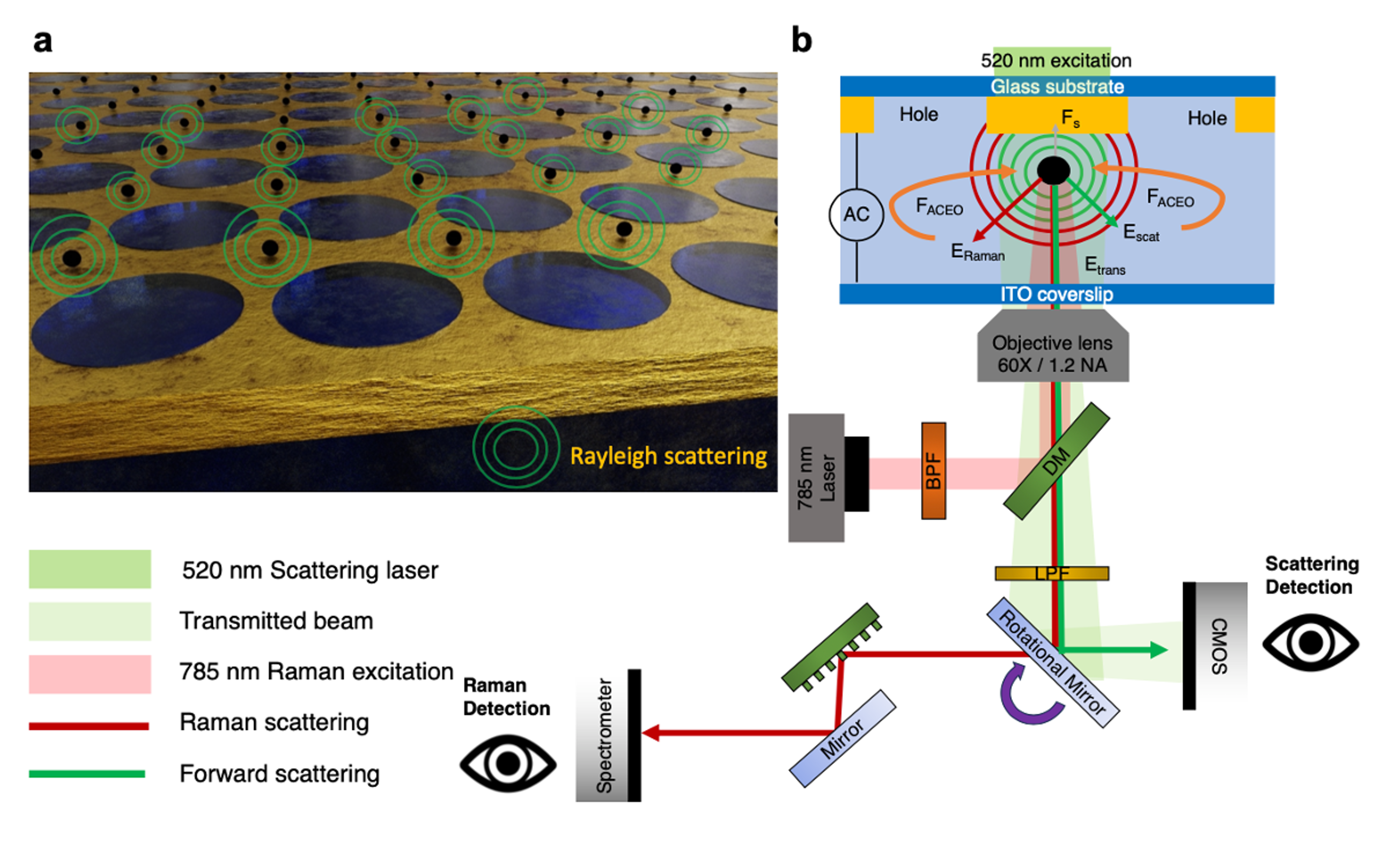
Developed an AI-enhanced interferometric nanotweezer platform for label-free detection of extracellular vesicles using deep-learning-based segmentation, contrast enhancement, and quantitative image analysis. Keywords: AI segmentation, interferometric imaging, nanophotonics, optical trapping, label-free sensing.
Challenge- Characterization of single nanoparticles requires accurate analysis of particle trajectories, which depends on reliable segmentation of low signal-to-noise interferometric images, Conventional segmentation approaches are time-consuming and limit scalable, high-throughput extraction of particle properties such as refractive index and size
Approach- Incorporated particle tracking algorithms with U-Net–assisted segmentation to enable automated and robust extraction of particle trajectories
Techniques- Label-free Optical Imaging system using interferences, Python assisted tracking, AI assisted Segmentation (training/prediction), Image processing for the contrast enhancement, Automated data sampling
Instruments- Micro-Manager, Nikon SDK, CW lasers, CMOS cameras 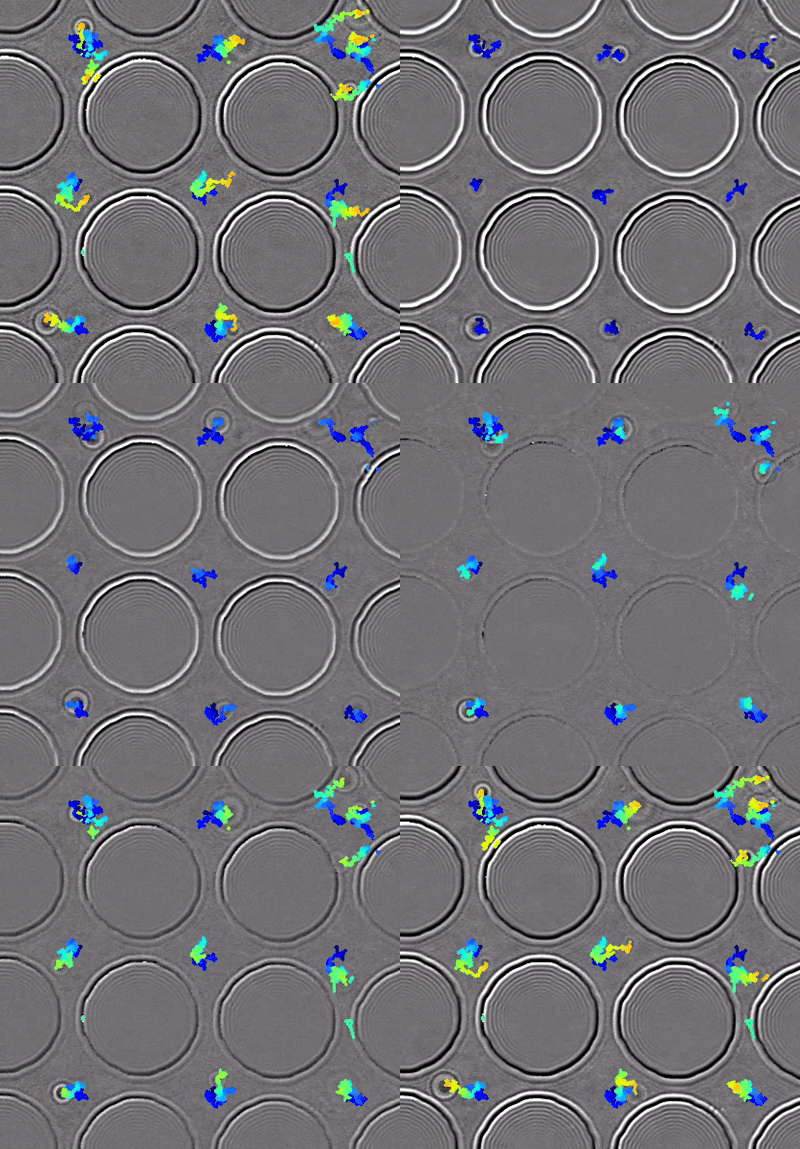
Published in Optics Express, 2020
In this paper, we demonstrate enhanced second-harmonic generation using picosecond laser pulses in a fiber cavity with AOM modulation.
Published in Nano Letters, 2023
In this paper, we demonstrate nanoscale particle (~35 nm) trapping using near-field enhancement arising from a distributed Bragg reflector layer.
Published in ACS Photonics, 2023
We present a noninvasive platform that combines the near-field optical gradient force from a nonradiating anapole nanoantenna with a diffusiophoretic force to achieve nanoscale particle transportation, trapping, and manipulation.
Published in npj biosensing (under review), 2025
We developed an integrated platform that combines electrohydrodynamic trapping, interferometric scattering microscopy, and AI-assisted tracking for rapid, label-free analysis of milk-derived extracellular vesicles (mEVs).
Published in Light: Science & Applications, 2026
We introduce Interferometric Electrohydrodynamic Tweezers (IET), an integrated platform that combines rapid molecular trapping, interferometric scattering imaging, and Raman scattering to rapidly trap and characterize single nanoparticles within seconds in one integrated platform.
Published:
This is a description of your talk, which is a markdown file that can be all markdown-ified like any other post. Yay markdown!
Published:
This is a description of your conference proceedings talk, note the different field in type. You can put anything in this field.
Undergraduate course, University 1, Department, 2014
This is a description of a teaching experience. You can use markdown like any other post.
Workshop, University 1, Department, 2015
This is a description of a teaching experience. You can use markdown like any other post.